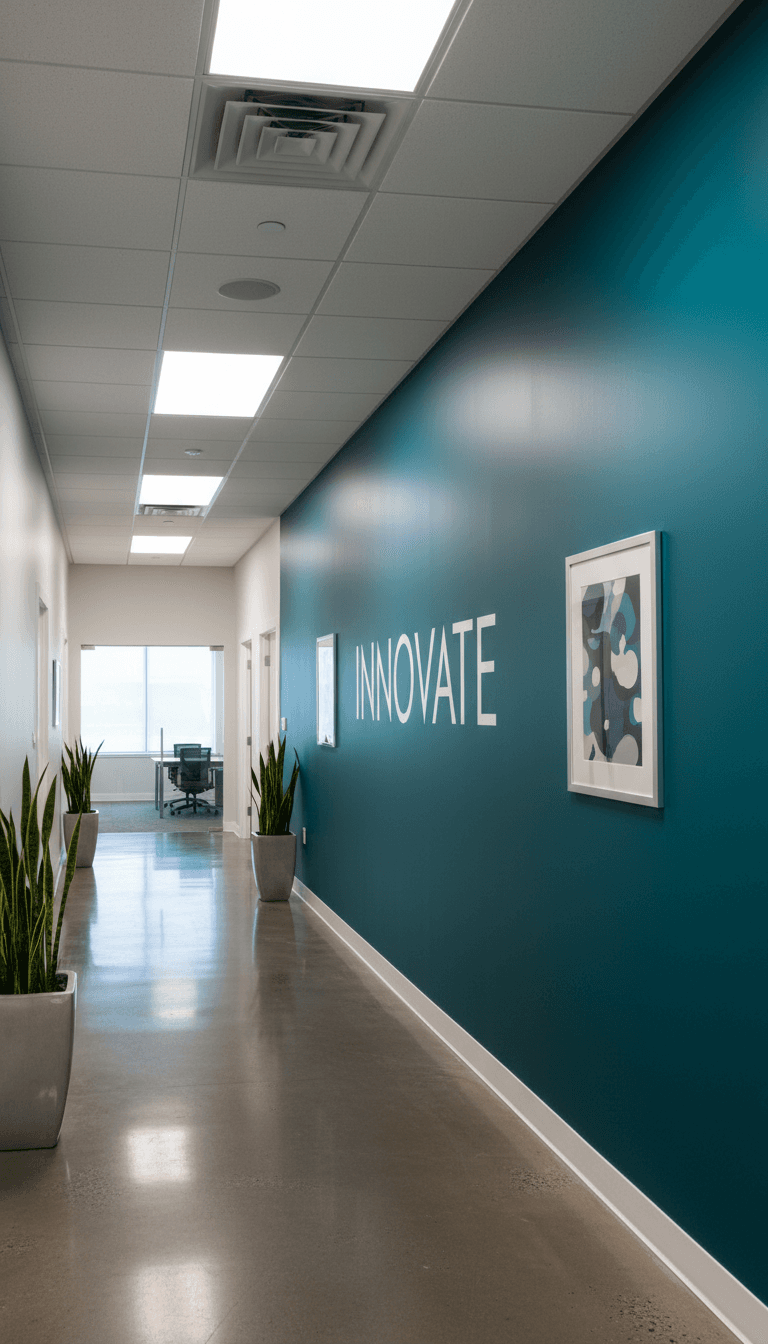
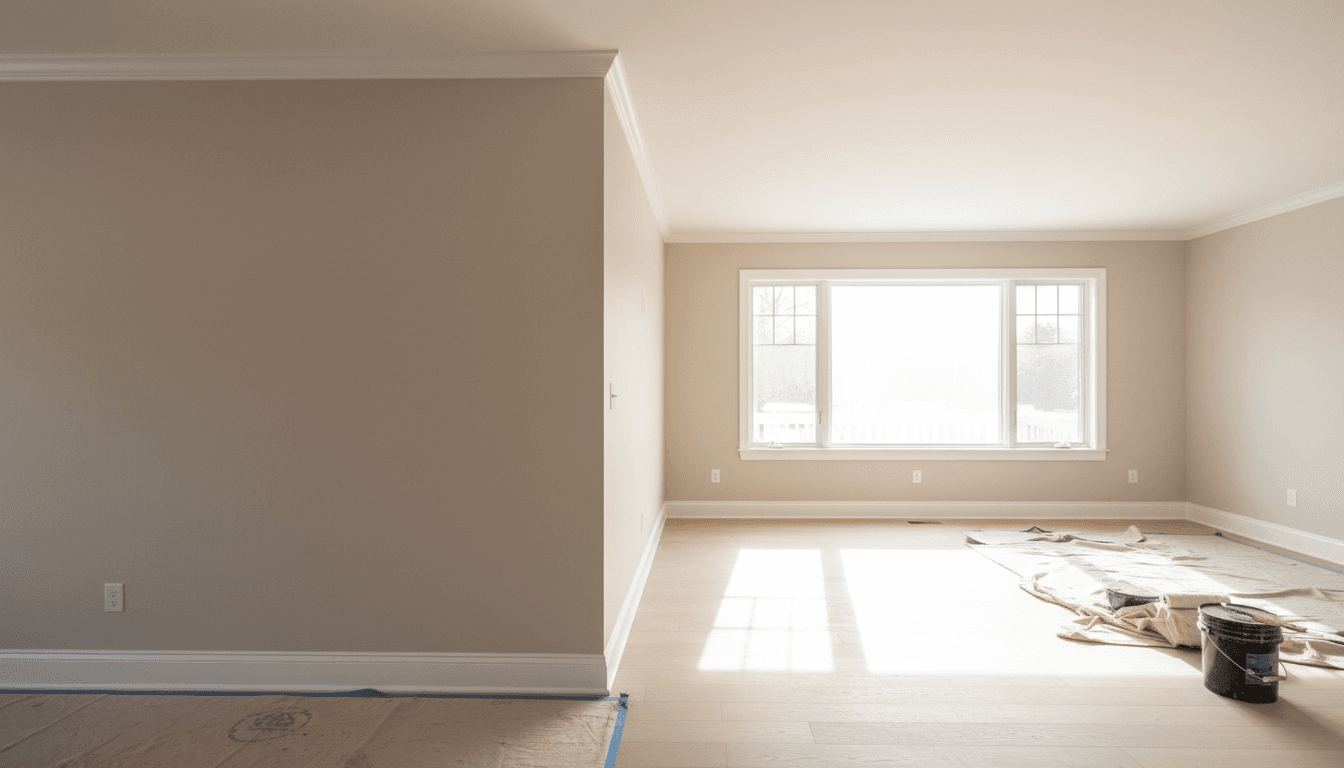
Business owners can achieve commercial painting without disrupting business by scheduling work during off-peak hours, utilizing low-odor paints, and implementing a phased project approach. This strategy ensures that high-traffic areas remain accessible while professional teams work during downtime; this prevents closures and maintains consistent operational productivity.
Maintaining a professional commercial facility in Georgia often presents a difficult trade-off between aesthetic maintenance and operational efficiency. Many business owners delay necessary upgrades because they fear that wet paint signs and ladders will drive away customers or stall productivity. However, allowing your property to look dated can be just as damaging to your brand as a temporary closure. At DNA Pro Painting, LLC, we believe that a high-quality finish should never come at the expense of your bottom line. This guide outlines how to achieve a flawless professional look through strategic after-hours scheduling, phased zone execution, and the use of advanced, low-odor coatings. You will learn how to navigate Georgia’s unique humidity while ensuring your daily operations remain seamless, safe, and entirely undisturbed throughout the entire project lifecycle.
The Business Owner Dilemma: Fresh Paint vs Daily Operations
Many Georgia business owners face a recurring frustration. They recognize that a dingy lobby or a faded facade sends the wrong message to clients, yet they hesitate to schedule a refresh. The primary concern is rarely the quote itself; rather, it is the fear that scaffolding, ladders, and wet paint signs will drive away customers or stall productivity. For a retail shop in Buford or a busy medical clinic in Atlanta, the real cost of a project includes every hour of potential downtime and every client who chooses a competitor because your doors were closed.
Approaching commercial painting without disrupting business is not a standard service offered by every contractor. It is a specific, strategic methodology designed to protect your bottom line. At DNA Pro Painting, we view our role as a component of your operational logistics. By emphasizing meticulous preparation and maintaining a professional, clean environment throughout the project, we ensure that your space remains functional. Our philosophy centers on the idea that a clean finish applies to more than just the paint on the wall; it describes the entire workspace we hand back to you. Utilizing professional commercial painting services that prioritize this strategic approach allows you to invest in your property’s value without sacrificing the daily revenue that keeps your business healthy.
Strategic Scheduling: After Hours and Weekend Painting
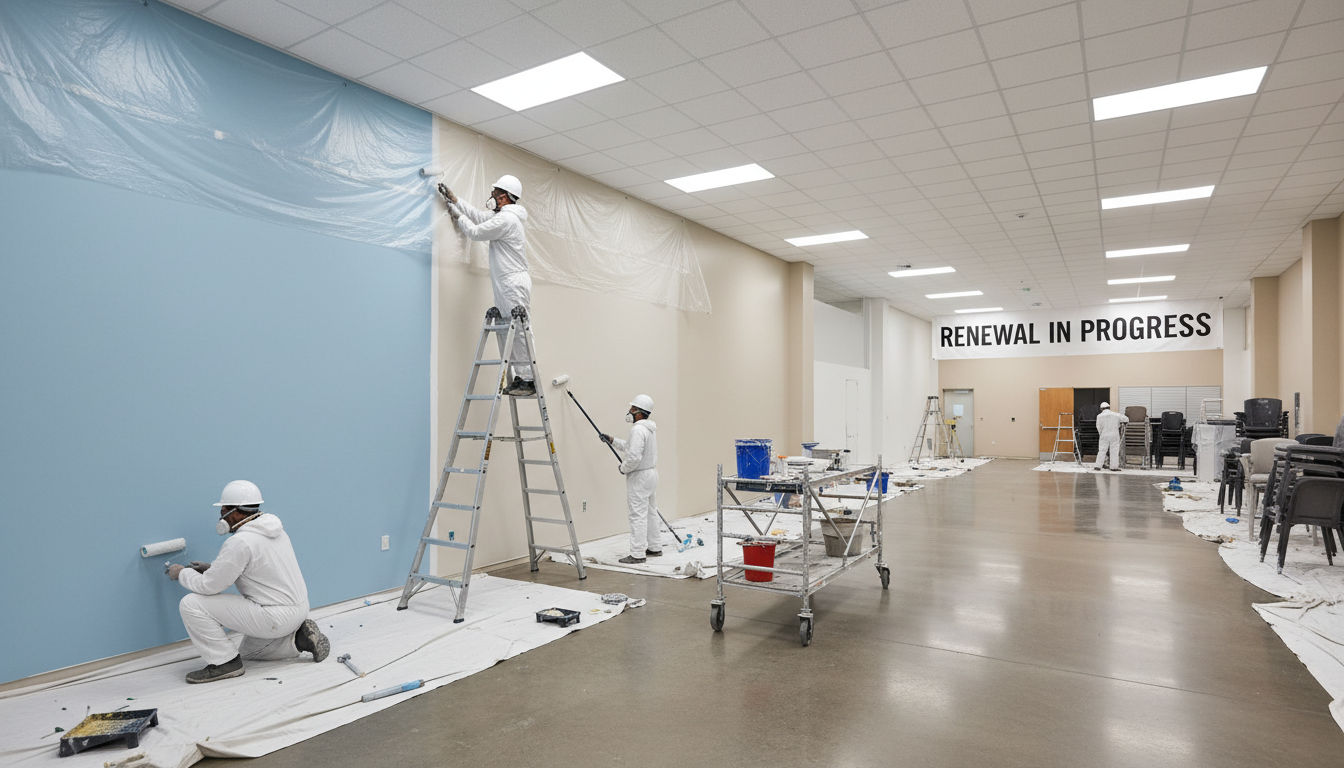
Effective scheduling is the most critical lever in a commercial painting project planning strategy. It dictates whether a project feels like a professional transformation or a logistical disruption. For retail stores, restaurants, and medical clinics, the most effective solution is often after-hours painting. By deploying crews during evenings and overnights, we align our work with your downtime. This ensures that while we are prepping and painting, your front doors remain open to the public during your peak revenue hours.
Different business models require different scheduling structures. High-traffic areas, such as a restaurant dining room or a clinic lobby, often benefit most from overnight shifts. The goal in these environments is a rapid turnaround. A professional crew must be capable of completing a specific scope, cleaning the workspace, and handing over a ready-to-use environment by 8:00 AM the following morning. This allows staff to walk into a refreshed space without navigating wet paint or equipment. This standard of reliability is what separates a specialized commercial contractor from a general residential painter.
Corporate offices frequently find weekend shifts more advantageous. In a professional office setting, the presence of crews during the week can distract employees even if the paint is dry. By utilizing a Friday evening to Sunday afternoon window, contractors can address larger contiguous areas like hallways or open-plan cubicle zones. This extended block of time allows for comprehensive prep work and multiple coats to be applied and fully cured before the Monday morning rush.
Business Type | Recommended Shift | Primary Benefit |
|---|---|---|
Retail & Restaurants | Overnight (Sun-Thu) | Zero impact on daily sales |
Medical Facilities | Evening/Overnight | Patient privacy and sterile access |
Corporate Offices | Weekend (Fri-Sun) | Minimal staff distraction |
Warehouses | Off-Peak/Rotating | Continuous logistics flow |
The logistics of a "silent" paint job rely on strict adherence to these windows. A successful project is measured by the lack of evidence that a crew was even there, aside from the high-quality finish on the walls. When your facility is ready for business at the start of each day, you avoid the hidden costs of lost productivity.
Phased Project Execution: Working in Zones
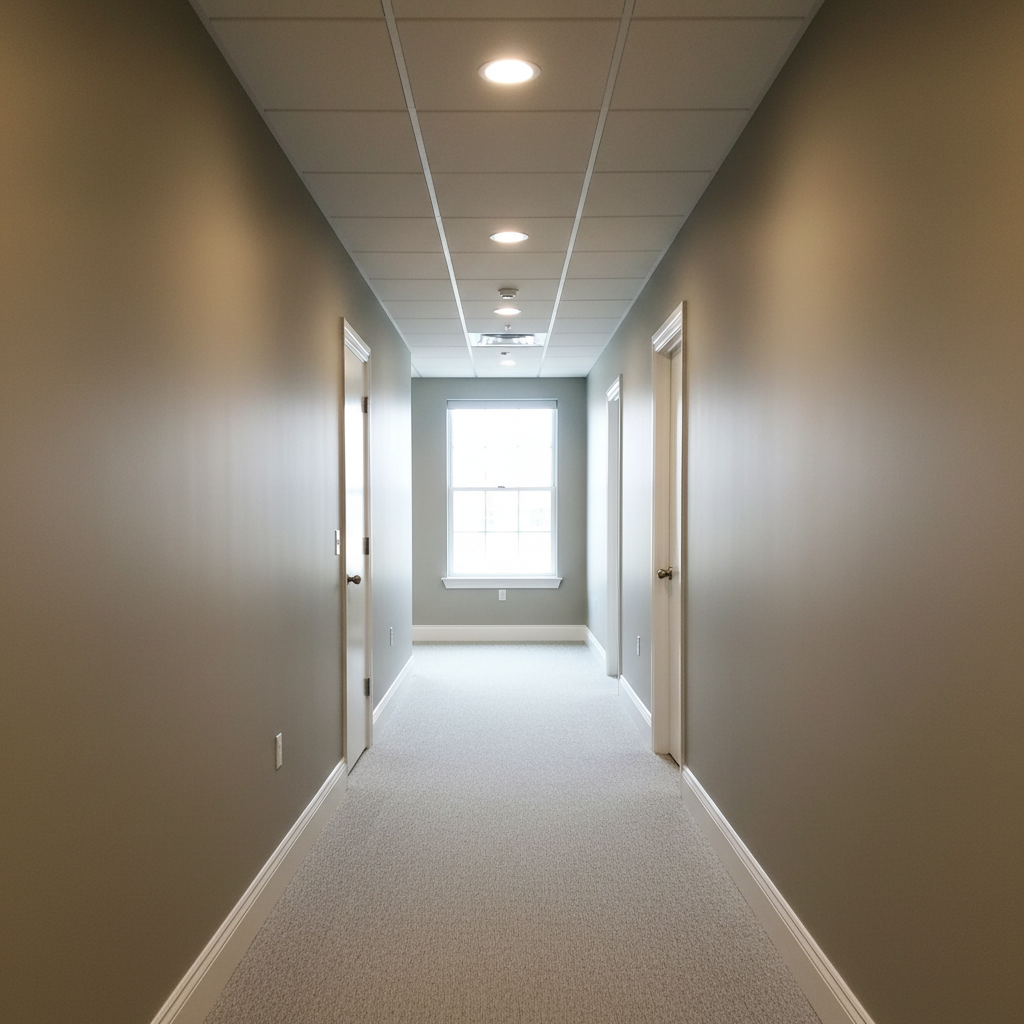
For larger Georgia facilities, even after-hours scheduling might not cover the entire square footage in a single window. In these instances, commercial painting project planning shifts toward a "zoning" strategy. This phased execution involves dividing a building into distinct, manageable sections. By treating each area as its own mini-project, a contractor allows the rest of the business to function normally while one specific zone is cordoned off for preparation and application.
Consider a typical corporate office layout in Buford. A strategic plan might schedule the breakroom and secondary hallways for Monday. Since these are high-utility but non-desk areas, staff can adjust their routines with minimal impact on output. On Tuesday, the focus shifts to the lobby and reception area; this ensures the most visible portion of the office is completed early in the week. Wednesday and Thursday are reserved for individual cubicle rows. By migrating teams to temporary workstations or conference rooms for a single day, the painting crew moves systematically through the workspace without halting the entire department.
Day | Targeted Zone | Operational Mitigation |
|---|---|---|
Monday | Breakroom & Kitchenette | Staff utilize designated satellite coffee stations |
Tuesday | Main Lobby & Reception | Reroute visitors through a secondary side entrance |
Wednesday | Cubicle Row A & B | Team A utilizes conference rooms or works remotely |
Thursday | Cubicle Row C & D | Team C migrates to the newly finished Row A |
This tactical approach requires a high level of coordination between the painting supervisor and the facility manager. When providing professional commercial painting services, we prioritize this logistical dance. It ensures that the transition between zones is seamless, with each area fully cleaned and returned to service before the next one begins. To discuss a custom zoning plan for your facility, you can contact DNA Pro Painting for a detailed site walkthrough.
The Science of Fast Drying and Low Odor Coatings
While strategic scheduling and zoning provide the framework for a project, the chemical composition of the coatings used is what makes commercial painting without disrupting business physically possible. Traditional commercial paints often contain high levels of Volatile Organic Compounds (VOCs), which are chemicals that off-gas into the air as the paint dries. In a confined office or a busy restaurant, these fumes can lead to headaches, respiratory irritation, and a persistent odor that negatively impacts the customer experience. Modern professional commercial painting services now prioritize Low-VOC or Zero-VOC formulations. These advanced coatings virtually eliminate the traditional paint smell, ensuring that staff can remain productive and customers remain comfortable even if an adjacent zone was painted just hours prior.
Beyond odor control, the physical drying speed of the material dictates the operational timeline. Standard retail paints may take twenty four hours or more to cure enough for regular contact. For high-traffic areas such as corridors, elevators, and restrooms, we utilize specialized "quick-return-to-service" products. These industrial-grade coatings are engineered to dry to the touch in as little as thirty minutes and reach full service hardness within two to four hours.
Coating Technology | Odor Profile | Drying Time | Best Use Case |
|---|---|---|---|
Standard Acrylic | Noticeable | 12-24 Hours | Exterior surfaces |
Low-VOC Interior | Minimal | 4-6 Hours | General office walls |
Zero-VOC Specialty | None | 1-2 Hours | Medical & food service |
Scuff-Resistant QRTS | Low | 2-4 Hours | Hallways & entryways |
Using these high-performance materials during commercial painting project planning ensures that the finish is durable enough to withstand the immediate return of foot traffic. This technical approach prevents the common issue of tacky surfaces attracting dust or showing fingerprints the morning after a shift. To discuss which fast-curing products are best for your facility, contact DNA Pro Painting for a technical consultation.
Managing the Georgia Environment: Humidity and Drying Times
In Georgia, humidity is the silent variable that can derail a commercial timeline. While we prioritize fast drying paints to facilitate commercial painting without disrupting business, manufacturers often calculate those drying times based on a controlled environment with 50% relative humidity. In Buford or Atlanta, especially during the summer, humidity levels frequently exceed 80%. This atmospheric moisture slows the evaporation of water based carriers in Low-VOC coatings, which can jeopardize a scheduled 8:00 AM reopening.
Professional crews mitigate these local challenges by integrating climate control into commercial painting project planning. We often deploy industrial dehumidifiers and high-velocity air movers to create a localized micro-climate within the work zone. This ensures that the air can absorb the moisture from the wet paint quickly. Furthermore, our technicians may adjust application techniques, such as applying multiple thin coats rather than one heavy layer, to promote a faster through-cure. By monitoring on-site hygrometers, we ensure that surfaces are truly dry to the touch before the staff arrives, preventing the tacky finish that can trap dust or allow fingerprints in high-traffic zones.
Communication and Safety Protocols

Managing the Georgia climate ensures the paint cures, but rigorous safety and communication protocols ensure the business functions. Executing commercial painting without disrupting business requires more than just skilled brushwork; it demands a logistical framework that protects your staff and assets. Safety begins with clear, high visibility signage and physical barriers. These measures prevent accidental contact with wet surfaces and keep foot traffic away from ladders or equipment, maintaining your facility's safety compliance throughout the project duration.
Logistics should be addressed early in the commercial painting project planning phase. We coordinate closely with management to identify fragile items, sensitive electronic equipment, or heavy furniture that requires specialized handling. By establishing a protocol for who moves specific items and how they are protected, we eliminate the risk of property damage.
To maintain transparency, we provide daily progress reports to management. These brief updates confirm which zones are complete and which are scheduled for the next shift, allowing you to manage your staff accordingly. Most importantly, our standard for a clean finish involves a microscopic approach to morning cleanup. Before the business opens, every drop cloth is removed, every piece of tape is peeled, and floors are vacuumed or swept. This ensures that when you contact DNA Pro Painting for professional commercial painting services, the only evidence of our presence is the pristine new color on your walls.
Common Questions About Commercial Painting Operations
After-hours labor typically carries a higher hourly rate compared to standard daytime shifts. However, for most Buford businesses, the slight increase in the contract price is a small fraction of the revenue lost during a full day of closure. Viewing this labor differential as a strategic insurance policy against downtime is key to achieving commercial painting without disrupting business.
Regarding air quality, modern Low-VOC materials eliminate the harsh chemical odors associated with traditional coatings. When utilizing professional commercial painting services, you can expect a neutral-smelling environment by the time your staff clocks in. These specialized formulas are designed for occupied spaces, ensuring that air quality remains safe for employees and customers immediately after application.
Lease agreements in Georgia often dictate specific maintenance responsibilities for tenants. Most commercial leases require written landlord approval for any aesthetic changes, including color updates. We recommend reviewing your tenant improvements clause to ensure your project scope meets their standards for quality and fire-rated material types.
For large-scale facilities, commercial painting project planning should begin four to six weeks before your target start date. This window ensures all logistics, from equipment rentals to custom color orders, are finalized. To secure a slot on our production calendar, contact DNA Pro Painting for an initial assessment.
Maintaining a professional look for your business does not have to mean putting your operations on hold. By choosing the right schedule and prioritizing efficient communication, you can refresh your commercial space with minimal impact on your daily workflow. If you want expert help navigating these logistics, you can learn more about our team and process to see how we handle large scale projects. We focus on delivering high quality results while respecting your business hours and environment, ensuring a smooth transition for your Georgia property.