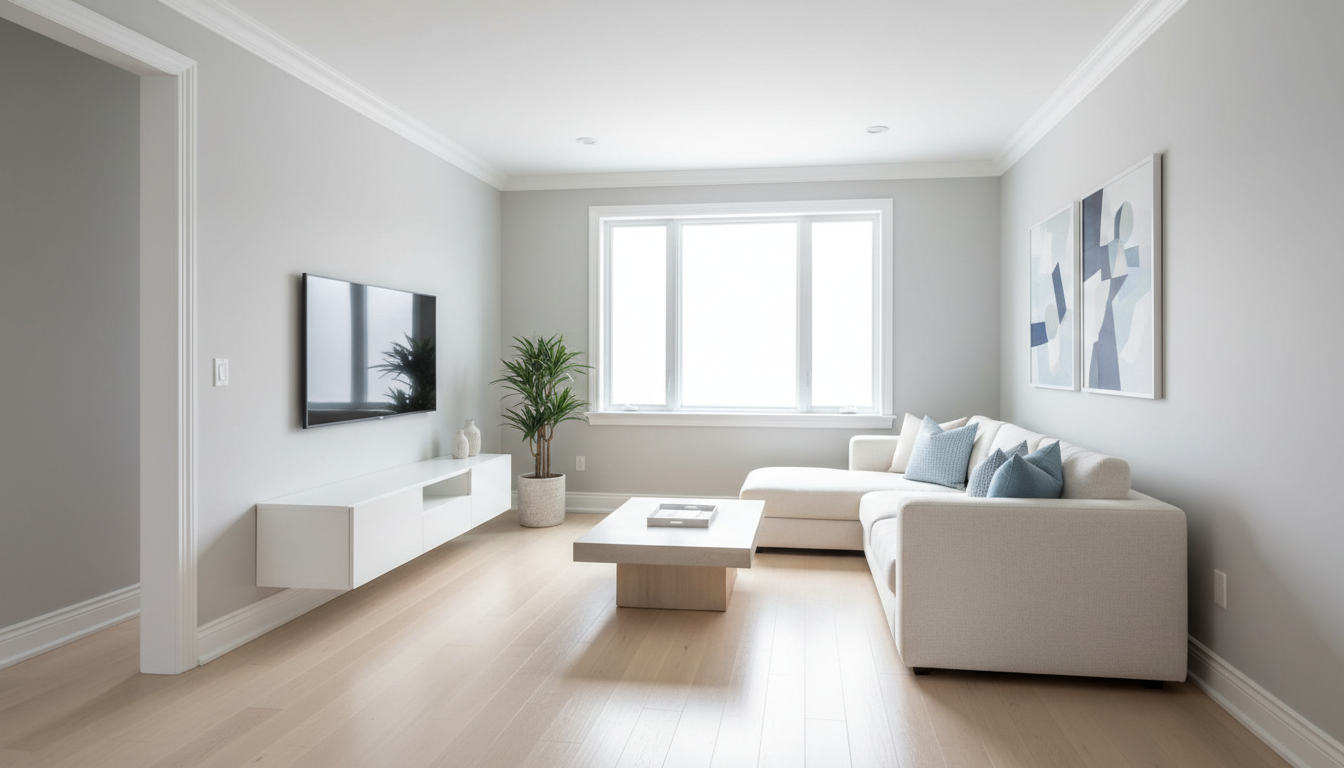
The best paint colors for small rooms include crisp white, light gray, soft blue, sage green, and warm taupe. These light and airy shades reflect more light to make a space feel open and expansive; furthermore, they provide a neutral backdrop that minimizes visual clutter. Using these hues helps homeowners create the illusion of more square footage in compact living areas.
Feeling claustrophobic in a small guest bedroom or a cramped home office is a common frustration for many Georgia homeowners. As professional painters, we understand that actual square footage is only one part of the equation; the way light interacts with your walls determines whether a room feels like a refined retreat or a confined corner. Choosing the right palette can visually push back the boundaries of a room by utilizing the principles of Light Reflectance Value to trick the eye. In this guide, we will explore five specific color categories, ranging from modern soft grays to sophisticated sage greens, that maximize your interior potential. You will also learn why technical details like sheen selection and professional surface preparation are just as vital as the pigment itself for creating a spacious, high-end finish.
Why the Right Color Choice Changes the Perception of Space
The science behind how we perceive a room often boils down to Light Reflectance Value (LRV). This scale measures the percentage of light a paint color reflects versus how much it absorbs. When selecting the best paint colors for small rooms, understanding LRV is essential because light colors reflect the majority of natural and artificial light. This reflection tricks the eye into thinking walls are receding, which creates an expansive, airy feel. Conversely, dark colors absorb light, making boundaries feel more defined and intimate.
Georgia homeowners frequently navigate the unique architectural challenges of historic bungalows or compact modern townhomes. In these smaller floor plans, the right palette is the difference between a cramped hallway and a breathable living space. As a residential painting company in Georgia, DNA Pro Painting, LLC recognizes that our local sunlight interacts uniquely with different pigments throughout the day. We provide expert interior painting services that go beyond simple application. Our team focuses on meticulous preparation and color consulting to ensure the chosen shade maximizes the specific dimensions of your property while respecting its original character. Choosing the right color is the first step in a professional transformation that changes how you experience your home.
The Science of Light Reflectance Value (LRV) in Small Spaces
Understanding the physics of light is what separates a standard paint job from a strategic space transformation. Light Reflectance Value, or LRV, is a numerical scale ranging from 0 to 100 that indicates how much light a color reflects. A value of 0 represents absolute black, which absorbs all light, while 100 represents a pure, theoretical white that reflects it all. For the best paint colors for small rooms, our consultants typically recommend selecting shades with an LRV of 60 or higher.
There is a critical distinction between brightening a room and expanding it. A bright room simply has high visibility, but an expanded room utilizes light to blur the boundaries where walls meet. When a color reflects a significant portion of the spectrum, it reduces the visual weight of the surfaces; this makes them appear further away than they actually are. Achieving this effect requires more than just picking a high LRV bucket off the shelf. It demands the meticulous preparation that DNA Pro Painting, LLC provides to ensure a perfectly smooth surface. If a wall is uneven, even high LRV paint will cast micro-shadows that trap light and ruin the expansive effect. By integrating technical data into our interior painting services, we help Georgia homeowners choose palettes that physically change the atmosphere of their living space.
1. Soft Gray: The Modern Neutral for Openness
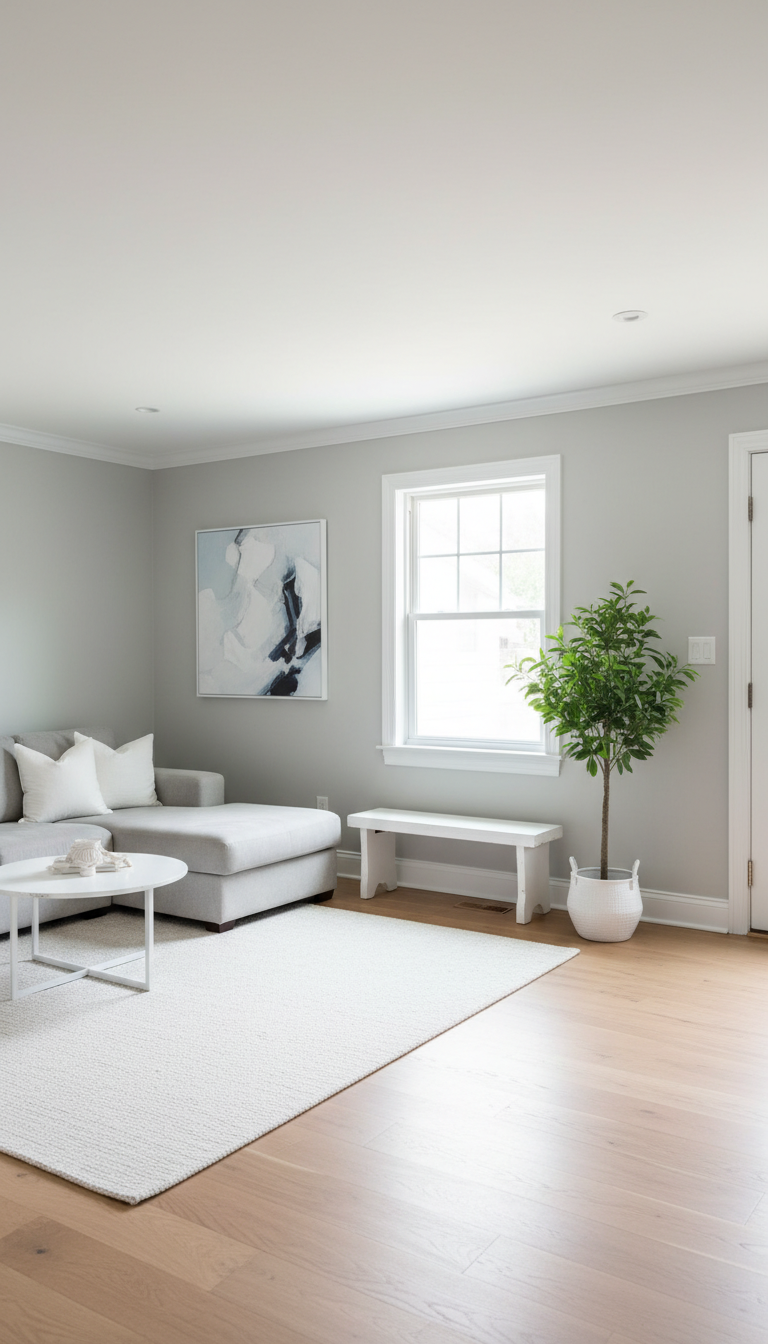
Soft gray has solidified its place among the best paint colors for small rooms because it offers sophisticated depth without sacrificing light. While a pure white can sometimes feel clinical or flat, a soft gray with a high LRV maintains a bright atmosphere while providing enough pigment to define the architecture. For Georgia homeowners looking to maximize square footage, we recommend selecting grays with cool undertones, such as subtle blue or green bases. These receding colors appear to move away from the viewer, which makes a cramped home office or a narrow living room feel significantly more expansive.
The success of a gray palette depends heavily on the precision of the application. Gray is particularly unforgiving when it comes to messy transitions or uneven surfaces; shadows cast by poor textures can quickly make a room feel dingy rather than modern. At DNA Pro Painting, LLC, our interior painting services emphasize meticulous preparation to ensure every wall is a smooth canvas. We focus specifically on achieving razor-sharp lines at the ceiling and in the corners. These clean finishes highlight the room’s geometric bones, using the soft gray to accentuate height and width rather than drawing attention to the physical boundaries of the space.
2. Crisp White: The Ultimate Space Expander
Crisp white remains the most effective tool for maximizing square footage. However, not all whites are created equal. A gallery white typically features a neutral or slightly cool base that maximizes Light Reflectance Value, making it one of the best paint colors for small rooms where a sharp, modern aesthetic is the goal. In contrast, a warm white contains subtle yellow or red undertones. This is often a better choice for Georgia rooms that lack abundant natural light, as it prevents the space from feeling clinical or cold while still maintaining an airy atmosphere.
To truly expand a room, we often recommend a monochromatic approach. By painting the walls, baseboards, and crown molding in the exact same shade of white, you eliminate the visual break that occurs when trim is a different color. This tricks the brain into seeing a single, continuous surface, effectively pushing the ceiling higher and the walls further apart. Achieving this seamless look requires the clean finishes DNA Pro Painting, LLC is known for.
When opting for an all-white palette, meticulous preparation is non-negotiable. Because white reflects so much light, it highlights every stray brush mark or wall patch that was not properly sanded. Our interior painting services involve a rigorous process of smoothing surfaces to ensure that the final result is a flawless, high-performance finish. As a dedicated residential painting company in Georgia, we understand that the success of a white room lies in these invisible details; ensuring the space feels intentionally designed rather than simply unfinished.
3. Deep Teal and Cool Blues: Using Depth to Create Distance
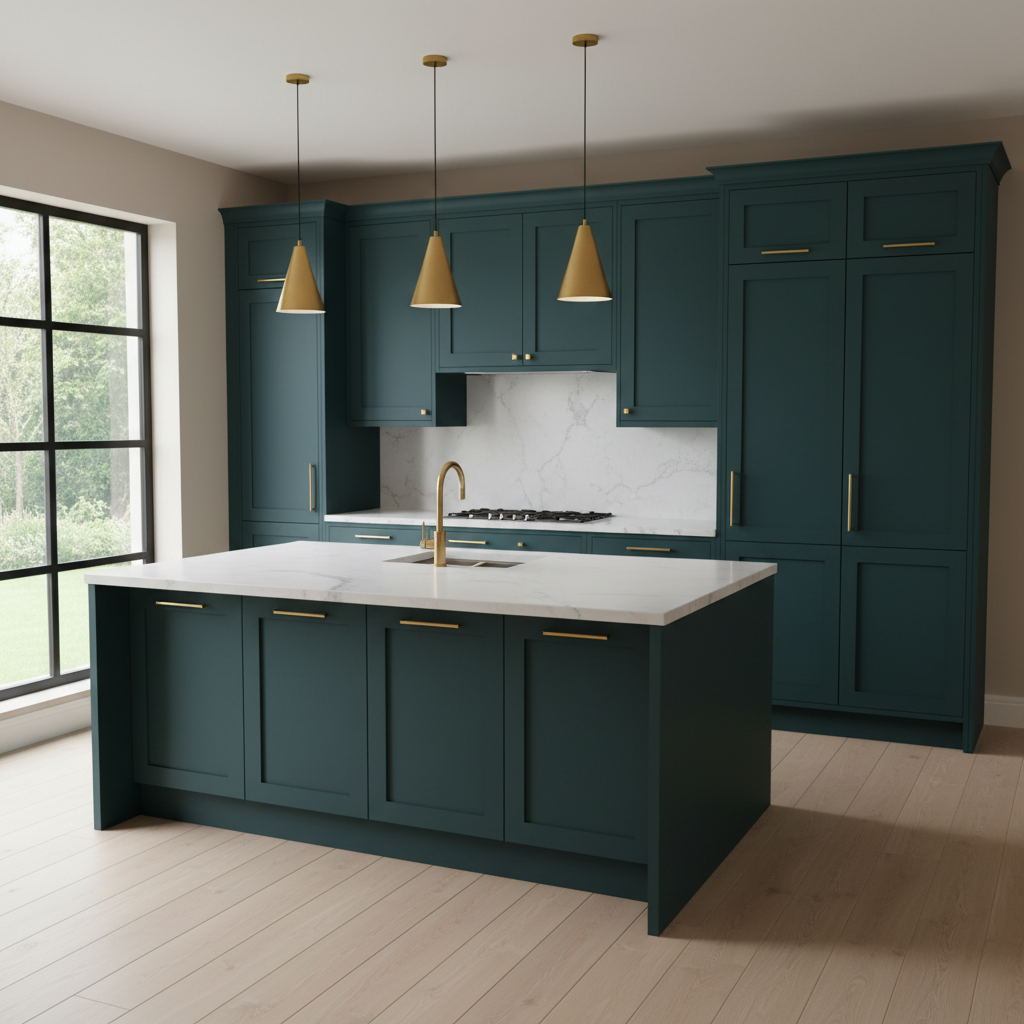
While conventional wisdom suggests the best paint colors for small rooms must be pale, deep teals and cool blues offer a sophisticated alternative by creating a sense of infinite depth. Just as a distant horizon or the night sky feels vast, cool-toned dark colors trick the eye into perceiving the walls as further away than they actually sit. This receding effect provides a room with a distinct personality without the associated risk of feeling claustrophobic.
Executing a dark palette in a tight space requires a level of precision that many DIY projects lack. Deep pigments are notoriously honest; they highlight every drywall dimple, sanding swirl, or uneven texture. Achieving a high-end look with these moody shades depends entirely on meticulous preparation. Before the first drop of paint is applied, our team ensures the substrate is flawlessly smooth to prevent light from catching on micro-imperfections that would otherwise distract the eye.
Our interior painting services prioritize surface integrity because we know that a single bump can break the illusion of depth. By investing in professional prep work from a dedicated residential painting company in Georgia, homeowners can move beyond safe neutrals and embrace the bold, expansive potential of deep color. This approach transforms a small room into a cocoon of depth rather than a confined box.
4. Warm Neutrals and Taupe: Cozy but Spacious
Warm neutrals and taupe represent a strategic choice for rooms that do not receive direct Georgia sunlight. In spaces where cool tones might appear flat or gloomy due to north facing windows or heavy tree cover, these shades provide a welcoming glow. Choosing a warm taupe or a sophisticated greige allows a small bedroom to function as a retreat, offering a sense of enclosure that feels cozy rather than cramped. These are among the best paint colors for small rooms because they maintain airiness while adding a layer of comfort that stark whites cannot achieve.
As a dedicated residential painting company in Georgia, we understand that warm pigments require high quality application to avoid looking muddy. Our interior painting services prioritize meticulous preparation to ensure that the subtle undertones of these neutrals are correctly displayed. By smoothing out surface variations before application, we ensure the light bounces evenly across the warm palette, preserving the breathable, retreat-like atmosphere every homeowner deserves.
5. Soft Sage Green: Bringing the Georgia Outdoors In
Soft sage green has emerged as a sophisticated choice for those seeking the best paint colors for small rooms. In Georgia, where lush landscapes and tall pines are staple elements of the scenery, choosing a muted green creates a visual bridge between the interior and the environment outside. This technique allows the eye to travel through a window and continue the color story into the landscape; this effectively tricks the brain into perceiving a small kitchen or mudroom as an extension of the yard rather than a confined box.
At DNA Pro Painting, LLC, our interior painting services focus on color transformations that respect the original character of the property. Muted greens work exceptionally well because they function as a living neutral, providing more personality than white while maintaining high light reflectance. Our team applies these tones with meticulous preparation, ensuring the finish is smooth enough to catch the soft shadows typical of foliage filtered light. As a dedicated residential painting company in Georgia, we understand how to balance these pigments to ensure they feel fresh and expansive rather than heavy or dated.
The Finishing Touch: Why Sheen and Prep Matter More Than Color

Selecting the best paint colors for small rooms is a vital step, but the most sophisticated palette will fail if applied to a poorly prepared surface. The true secret to making a compact Georgia living space feel expansive lies in how light interacts with the wall's texture and sheen. In the painting industry, this is often referred to as the expert gap, where DIY projects often fall short of professional results.
Paint sheen dictates how much light bounces off a surface versus how much is absorbed. For smaller rooms, higher sheens like eggshell or satin are often preferred because they act as subtle mirrors, reflecting light back into the space to create an airy feel. However, higher sheens are also more revealing. Any dent, nail pop, or uneven patch becomes magnified when light hits a reflective finish. If a wall is not perfectly flat, these micro-shadows create visual noise that makes the boundaries of a room feel closer and more cluttered.
DNA Pro Painting, LLC bridges this gap through meticulous preparation. Our process involves exhaustive sanding, precision patching, and clean masking to eliminate every physical imperfection before the first coat of paint is applied. As a dedicated residential painting company in Georgia, we understand that a clean finish is the result of what happens before the brush touches the wall. By ensuring a perfectly smooth substrate, our interior painting services allow light to travel across the surface without interruption. This flawless reflection is what ultimately tricks the eye into seeing more space, turning a simple color change into a complete spatial transformation.